


Cash Jar - Win Real Money Easy
4.9203.00 Reviews
App Specs
- Version
- 1.0.9
- Updated On
- License
- Free
- Downloads
- 100,000+
- Developer
- SpinZ Gaming LLC
- Categories
- Casual
- Platform
- Android
Screenshots


 Analysis by AppCompare
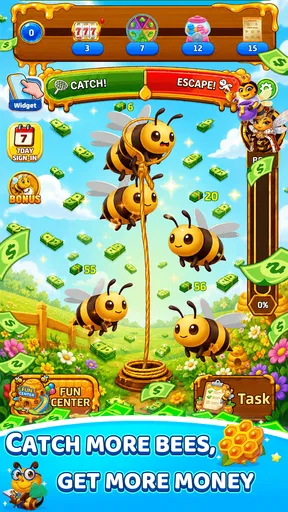
I approached Cash Jar - Win Real Money Easy as a small, casual game rather than as a serious income tool. Its central idea is immediately understandable: open the game, tap, collect rewards, and return when another collection opportunity is available. That simplicity is the main reason to try it, but it is also the point that defines its limits. This is not the kind of title I would choose for deep strategy, a long campaign, or a rich social experience. I would choose it for short, low-effort sessions when I want something uncomplicated to do.
The game comes from SpinZ Gaming LLC and is free to install. It is listed for Teen users, works on Android devices running version 8.0 or later, and currently appears as version 1.0.9. That combination makes it accessible to many older phones, although the age rating is still worth taking seriously for families deciding whether it belongs on a younger player’s device. The store summary focuses on tapping, rewards, and cashing out on a repeating schedule, so the practical question is not whether the concept is easy to understand. It is whether that loop feels worthwhile after the novelty fades.
How I Decide Whether a Tap-to-Reward Game Is Worth Keeping
Before installing a game like this, I look at four things: how much attention it demands, whether the routine fits naturally into my day, how clearly it explains progress, and whether the reward system feels like a pleasant extra rather than a promise of dependable earnings. Cash Jar scores well on the first two points because its basic interaction is light. I do not need to learn a complicated control scheme or reserve a long uninterrupted session.
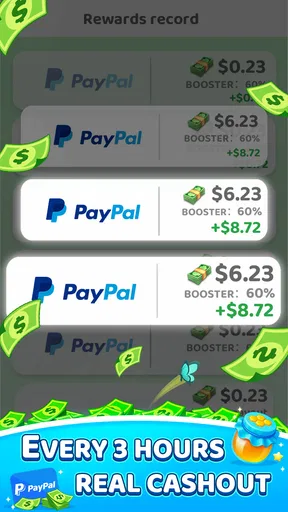
The repeating three-hour rhythm is especially important. It suggests that the game is designed around occasional check-ins rather than continuous play. I would not treat that schedule as an obligation. Instead, I would use it as a loose reminder: if I happen to open the game during a break, I can see what is available, tap through the current interaction, and leave. The best experience comes from fitting it around an existing routine, not from rearranging the routine around the app.
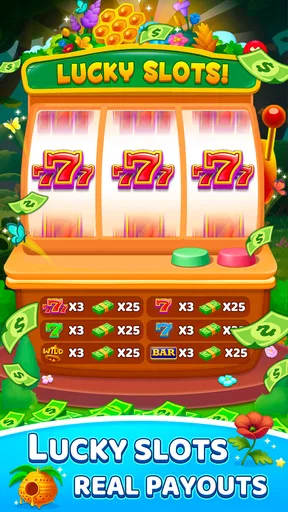
That distinction also helps set expectations about money. The phrase “win real money” can make a casual game sound like a reliable earning method, but I would never use a title like this to plan bills, replace paid work, or estimate a monthly budget. Rewards should be viewed as an uncertain bonus attached to a game loop. Anyone installing it mainly for income may become frustrated if the tapping feels repetitive or if the time spent checking in seems out of proportion to the eventual benefit.
I also pay attention to the kind of patience a game requires. Some casual games reward concentration, timing, or gradual mastery. This one is more about remembering to return and deciding whether the short interaction is worth doing. That makes it a better match for people who enjoy small bursts of activity than for players who need a clear sense of skill development.
The first sessions: simple enough, but not automatically compelling
My first impression is that the low barrier to entry is the strongest part of the design. The tap-focused concept does not ask me to study instructions before I can begin. For a quick distraction, that is useful. I can understand the basic purpose almost immediately, which is exactly what I want from a lightweight casual game.
Worth Reading Before You Choose

EA SPORTS FC Mobile 26 Is a Bigger Football Game, but It Takes Time

Flipboard Shows What News Apps Must Do Beyond the Feed

Switching to Android Auto Means Rethinking Your Driving Routine

Google Calendar Makes a Crowded Week Easier to Manage

Ludo King Makes the Most of the Minutes Between Plans

Baby Panda World Brings Quick Play to Modern Phones, but Its Game Library Feels Busy
At the same time, easy access is not the same as lasting depth. Once I understand the main action, the experience depends heavily on whether I enjoy repeating it. Players who like watching a counter move toward a goal may find that satisfying. Players who expect new levels, changing challenges, or increasingly demanding decisions may find the loop too narrow.
A practical way to test the fit is to install it without making it part of your schedule. Use it when you naturally have a spare moment, then ask whether you wanted to return or merely remembered that you had to. If the latter is true, the game may not be adding enough enjoyment to justify keeping it installed.
Where Cash Jar is strongest
The clearest advantage is convenience. In the broad casual-game category, many alternatives ask for more concentration: matching tiles, managing a small world, solving puzzles, or surviving timed rounds. Cash Jar takes a different route. Its appeal is the absence of a demanding challenge. That makes it suitable for a short pause when I do not want to commit to a full game session.
It can also work as a transition activity. I might open it while waiting for an appointment, between household tasks, or during a short break from work. In those situations, a game that can be understood and left quickly is more useful to me than one that punishes interruption. The three-hour return cycle reinforces that occasional-use character.
Another strength is that the reward goal gives the tapping a clearer purpose than a completely empty idle interaction. Even when the activity is simple, I know what I am working toward. That sense of progress can make a few seconds of play feel more directed than endlessly scrolling through a feed.
The public response is also encouraging at a glance. Cash Jar holds a 4.8 average from around two thousand ratings, with close to two hundred written reviews and more than one hundred thousand installs. Those figures suggest that a meaningful group of players has found the concept appealing enough to try and rate. I would still treat ratings as one signal rather than a guarantee, because a high average cannot tell me whether the experience matches my own tolerance for repetition.
One non-obvious benefit is that the game may suit people who dislike the pressure found in competitive casual titles. There is no need, in the basic concept, to beat another player or protect a leaderboard position. If my goal is simply to perform a small action and check progress, that calmer structure can be preferable to games that constantly push urgency.
Using the three-hour rhythm without letting it take over
I would handle the collection cycle deliberately. Rather than setting several alarms, I would attach a check-in to something I already do, such as a midday break or an evening wind-down. This avoids turning a casual game into another notification demanding attention. It also gives me a realistic way to judge whether the routine is convenient.
A useful test is to compare natural check-ins with forced ones. If I only enjoy Cash Jar when I happen to remember it, that is a sign the game works best as a background pastime. If I feel compelled to interrupt other activities so I do not miss a reward window, the trade-off becomes less attractive. The game should fit around my day, not dictate it.
I would also keep a simple mental record of how often I actually open it. Not because I expect a precise financial calculation, but because it reveals whether the reward loop is supporting enjoyment or creating busywork. This is one of the most important practical distinctions between a pleasant casual game and an app that feels like a chore.
Where another casual option may be better
Cash Jar is not the right choice for every kind of player. If I want a game that improves my puzzle-solving, reflexes, planning, or creative skills, I would choose a title built around those activities instead. A conventional puzzle game may give me more meaningful decisions per minute, while an arcade game may provide a stronger sense of mastery. Cash Jar is better when minimal effort is part of the appeal.
It may also be a poor fit for someone who wants transparent, predictable progress. Reward-focused games can make a player think about the destination more than the play itself. If I need to know exactly how long a session will take, what each action accomplishes, and what kind of result I can expect, I would probably prefer a standard casual game with visible levels or a fixed scoring system.
There is a second trade-off involving attention. Traditional games usually ask for active participation while they are open, then stop asking anything when I leave. A scheduled reward loop can encourage repeated checking. For people trying to reduce phone use, that pattern may be less desirable than a self-contained puzzle that can be played once and closed.
I would also skip it if my main motivation were dependable cash. The game’s reward theme may be interesting, but it does not turn casual tapping into a predictable financial product. A person seeking guaranteed compensation should look at ordinary paid work or clearly defined earning services instead of relying on a game.
What the free price does and does not change
Because the game is free, the initial decision is relatively easy: the main cost is not an entry fee but the time and attention required to use it. That makes a brief trial reasonable for curious players. Still, “free” does not mean costless. A repetitive check-in routine can consume attention, and the value of the experience depends on whether I enjoy that routine.
I would not judge it after only one tap. The more useful evaluation is whether the loop remains comfortable across several ordinary days. Does it work when I am busy? Do I remember it naturally? Does the reward progress make me feel satisfied, or am I opening it only because I fear missing something? Those answers matter more than the absence of a download charge.
The Teen content rating should also influence the decision for families. Parents may want to discuss the difference between playing for entertainment and expecting real financial results. That conversation is especially important when a younger user sees cash language and assumes the app functions like a reliable earning opportunity.
A realistic everyday scenario
Imagine that I install Cash Jar on an older Android phone and use it during a normal weekday. I check it once during a morning pause, close it, and return later when I naturally have another few minutes. In the evening, I decide whether the progress feels rewarding enough to continue. If those check-ins remain brief and incidental, the game has done its job as a casual distraction.
Now imagine the opposite. I begin watching the clock, interrupting conversations, and opening the app repeatedly because I am focused on the next available reward. In that situation, the same feature that made the game interesting has become friction. I would either reduce the frequency of check-ins or remove it and choose a game that ends cleanly after each session.
This scenario shows why I would not recommend it solely from the headline promise. The right user is someone who enjoys a lightweight reward loop and can keep it in perspective. The wrong user is someone who needs either deep gameplay or dependable income.
Installation, device fit, and the switching decision
Support for Android 8.0 and later gives Cash Jar a practical advantage for people who keep an older device instead of upgrading frequently. That can make it a convenient experiment on a spare phone or a budget handset. I would still judge the experience on the specific device, because age alone does not tell me how comfortable the app will feel during repeated check-ins.
Switching away is simple if I decide the loop is not for me, but there is an important psychological cost: I may feel reluctant to leave after building progress. That is a common issue with reward-based routines. I would decide in advance what makes the app worth keeping, such as enjoying the short sessions without reminders. If it fails that test, I would switch rather than continue merely because I have already invested attention.
On the other hand, switching from a more demanding casual game to Cash Jar can make sense when my schedule changes. Someone who used to enjoy long puzzle sessions but now has only scattered breaks may appreciate a title that does not require concentration for ten uninterrupted minutes. The reverse is also true: once I want more substance, moving to a level-based or skill-based game would be a sensible upgrade.
My recommendation for different kinds of players
I recommend Cash Jar to adults and older teens who enjoy simple tap interactions, like checking gradual progress, and understand that a game should not be treated as a guaranteed source of money. It is particularly suitable for short breaks, older Android devices, and players who prefer a calm routine over competition or complex mechanics.
I would recommend trying it with a boundary: use natural breaks rather than constant reminders, and evaluate whether the reward loop remains enjoyable. That small rule protects the casual nature of the experience and makes it easier to recognize when the app is no longer worth the attention.
I would not recommend it to players searching for a substantial campaign, demanding gameplay, or a dependable income stream. For those needs, a conventional puzzle, arcade, simulation, or paid work option will be a better match. Cash Jar succeeds when its simplicity is exactly what I want; it becomes weak when I expect the tapping to develop into a deeper game.
Overall, SpinZ Gaming LLC has created a focused casual game with an easy entry point and a clear return rhythm. Its strong rating and growing install base show that the idea resonates with many players, but my final judgment depends on expectations. Use it as a light game with a possible bonus, not as a financial plan. If that sounds like the experience you want, the free download makes a short trial reasonable. If you need challenge, certainty, or richer gameplay, I would spend my time elsewhere.
Pros
- Simple interface makes it easy to browse available earning opportunities.
- Short activities can fit conveniently into spare moments.
- Clear reward progress helps track points and cash-out goals.
- Lightweight design should work smoothly on many Android devices.
- No special skills are needed to start completing basic tasks.
Cons
- Earnings per activity may be small compared with the time required.
- Reward availability can vary by location and user profile.
- Some offers may redirect you to third-party websites or apps.
- Cash-out eligibility may require reaching a minimum balance first.
- Frequent notifications or promotional content may feel intrusive.
FAQs for Cash Jar - Win Real Money Easy
What is Cash Jar - Win Real Money Easy, and how does it work?
Cash Jar - Win Real Money Easy is a rewards-style mobile app that lets users collect points or virtual earnings by completing activities offered inside the platform. These activities may include watching advertisements, trying promotions, answering questions, or reaching specific in-app goals. After accumulating enough balance, users can request a reward through the payment methods supported in their region. Available tasks and earning rates can change frequently.
Can you really make real money with Cash Jar - Win Real Money Easy?
The app may provide opportunities to earn small rewards, but it should not be considered a reliable source of income or a substitute for employment. Earnings generally depend on the number of available tasks, your location, eligibility requirements, and the time you spend using the app. Before downloading, review the current terms, reward limits, and user feedback, because advertised amounts may not represent typical results.
How do withdrawals and minimum payout requirements work?
Cash Jar - Win Real Money Easy may require users to reach a minimum balance before requesting a withdrawal. The available payout options, processing times, verification steps, and regional restrictions can vary. Some rewards may be delivered through digital payment services, gift cards, or other supported methods. Always check the withdrawal section in the latest version, and never assume that every payment method is available in your country.
Is Cash Jar - Win Real Money Easy safe to use?
The app should be used carefully, as reward platforms commonly request account information, device permissions, and interaction with third-party advertisements or offers. Download it only from an official app store, examine the developer details, and read the privacy policy before registering. Avoid sharing unnecessary sensitive information, paying money to unlock withdrawals, or installing files from unofficial websites claiming to be related to the app.
What should I know about ads, eligibility, and account restrictions?
Users may encounter frequent advertisements because advertising and sponsored offers can support this type of rewards app. Some tasks may be limited by age, country, device, or account history, and suspicious activity, duplicate accounts, VPN usage, or automated behavior could lead to rejected rewards or account suspension. Follow the platform rules, keep realistic expectations, and contact official support if a task or withdrawal does not register correctly.


